“can be planted” search results (10000)
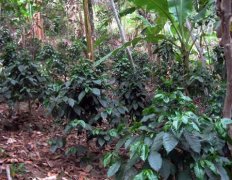
Production of coffee beans Coffee trees from planting to fruiting
Coffee trees take 3-5 years from planting to fruiting. 6-10 years of coffee trees are the most likely to bear fruit, about 15-20 years, is the harvest period. Coffee trees are usually bred in nurseries and grow into saplings, and then moved to coffee farms a year later, in full compliance with the way the Arabs planted and cultivated coffee trees. Coffee trees will continue to take root downward and upward in the first four or five years of their growth.
2015-06-04 Coffee beans production coffee planting fruit 3-5 year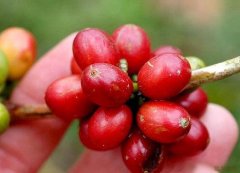
The method of cultivating coffee trees how to grow coffee trees at home?
"Coffee Coffee for you"-oblique planting method: when planting, the seedlings are oblique, usually at an angle of 30 degrees to 60 degrees from the ground (preferably 45 degrees). Oblique planting can inhibit the growth of the top of the trunk and promote the germination of basal straight branches. Attention should be paid to the selection of 3 or 4 sturdy and spaced direct branches for new stem culture. Cut off the old stem after the new stem grows (figure 2)-curved dry method: straight when planting, waiting for
2015-09-11 Coffee cultivation method at home oneself how grow coffee coffee for you to share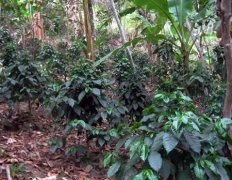
Production of coffee beans Coffee trees from planting to fruiting
Coffee trees take 3-5 years from planting to fruiting. 6-10 years of coffee trees are the most likely to bear fruit, about 15-20 years, is the harvest period. Coffee trees are usually bred in nurseries and grow into saplings, and then moved to coffee farms a year later, in full compliance with the way the Arabs planted and cultivated coffee trees. Coffee trees will continue to take root downward and upward in the first four or five years of their growth.
2015-10-13 Coffee beans production coffee planting fruit 3-5 year
Arabica coffee cultivation techniques Multi-stem shaping and cultivation of coffee trees
Multi-stem integer Multi-stem integer is an integer method that uses the first branch as the main result branch. The purpose of integer is to cultivate multiple trunks and grow a large number of robust first-order branches. Multi-trunk trees do not pick the top. As a result, when the yield decreases after 3 to 5 years, new trunks are replaced.① Cultivation of multi-stem method oblique planting method: When planting, the seedlings are obliquely planted, generally at an angle of 30~60 degrees with the ground. oblique planting can inhibit
2015-02-16 Arabica coffee cultivation techniques multi-stem shaping cultivation utilization one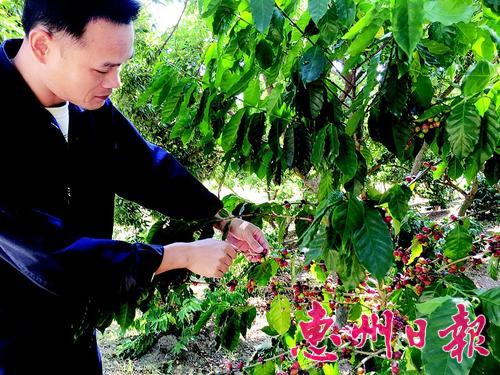
Coffee is also produced in Huizhou, Guangdong. Coffee beans brought by Taiwan businessmen are cultivated and germinated in Huizhou.
Coffee beans cultivated in Huizhou. Coffee beans cultivated in Huizhou. Our reporter Huang Tao Chen Chunhui (Reporter Huang Tao Chen Chunhui) I have heard of Hainan coffee, and Yunnan coffee is also known. Have you tried Huizhou coffee? The reporter learned yesterday that African coffee is also quietly planted on many hillsides in Huizhou. After years of trial, it is now known as African coffee.
2015-12-01 Guangdong Huizhou production coffee Taiwan businessmen bring coffee beans breeding germination
Low carbon is an attitude, the wonderful use of discarded coffee grounds!
The main uses of coffee grounds are as follows: 1. Coffee grounds, plant nutrients. Because coffee grounds contain nutrients needed for plant growth, coffee grounds are used as fertilizer around the roots of plants, which can not only nourish plants, but also prevent the occurrence of diseases and insect pests. two。 Coffee grounds can deodorize and deodorize. Coffee grounds have the ability to absorb odors. Coffee grounds can be put in small plates and placed in toilets and shoes.
2014-09-23 Coffee knowledge coffee utilization coffee residue
Can I plant coffee trees at home?
The origin of the coffee tree is Ethiopia in Africa. In botany, coffee trees belong to the evergreen trees of the subgenus Rubiaceae, and coffee beans, commonly known as coffee beans, are the seeds of the fruit of coffee trees, just because they are shaped like beans, so they are called coffee beans. Climate is the decisive factor for coffee cultivation. Coffee trees are only suitable for growing in the tropics or subtropics, so latitude 2.
2016-04-15 At home yes coffee trees origin Africa Ethiopia plants
Caffeine and healthy caffeine is a kind of plant alkaloid.
Caffeine is a kind of plant alkaloid. At present, more than 60 kinds of plants are known to contain caffeine, of which coffee and tea are the most common. In fact, this is a product of tropical plants adapting to the environment. In the tropics, there is no winter, and diseases and insect pests are more serious, so plants have evolved many ways of self-defense. Caffeine is one of them, which can be regarded as a natural insecticide. Although there is one
2015-09-02 Caffeine health plant alkaloids one caffeine currently known
Analysis of the process from coffee tree planting to coffee bean harvest
Coffee trees take 3-5 years from planting to fruiting. 6-10 years of coffee trees are the most likely to bear fruit, about 15-20 years, is the harvest period. Coffee trees are usually bred in nurseries and grow into saplings, and then moved to coffee farms a year later, in full compliance with the way the Arabs planted and cultivated coffee trees. Coffee trees will continue to take root downward and upward in the first four or five years of their growth.
2015-05-14 Coffee planting coffee beans harvest process analysis coffee results 3-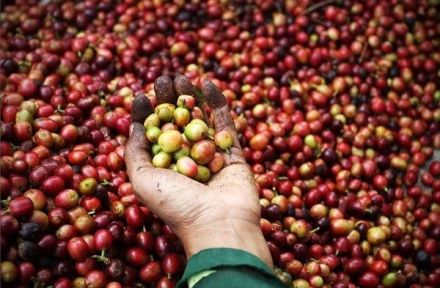
From the planting of coffee trees to the harvest of coffee beans
Coffee trees take 3-5 years from planting to fruiting. 6-10 years of coffee trees are the most likely to bear fruit, about 15-20 years, is the harvest period. Coffee trees are usually bred in nurseries and grow into saplings, and then moved to coffee farms a year later, in full compliance with the way the Arabs planted and cultivated coffee trees. Coffee trees will continue to take root downward and upward in the first four or five years of their growth.
2015-03-27 Coffee planting coffee beans harvest process coffee fruit 3-5 year
It takes 3-5 years from coffee tree planting to coffee bean harvest.
Coffee trees take 3-5 years from planting to fruiting. 6-10 years of coffee trees are the most likely to bear fruit, about 15-20 years, is the harvest period. Coffee trees are usually bred in nurseries and grow into saplings, and then moved to coffee farms a year later, in full compliance with the way the Arabs planted and cultivated coffee trees. Coffee trees will continue to take root downward and upward in the first four or five years of their growth.
2015-11-02 Coffee planting coffee beans harvest 3-5 years coffee fruit 3-5
General knowledge of boutique coffee from coffee tree planting to coffee bean harvest
Coffee trees take 3-5 years from planting to fruiting. 6-10 years of coffee trees are the most likely to bear fruit, about 15-20 years, is the harvest period. Coffee trees are usually bred in nurseries and grow into saplings, and then moved to coffee farms a year later, in full compliance with the way the Arabs planted and cultivated coffee trees. Coffee trees will continue to take root downward and upward in the first four or five years of their growth.
2014-12-19 Boutique coffee common sense planting coffee beans harvest results 3-
About coffee companions, cream, plant fat powder and health
Recent studies have shown that the partial hydrogenation of vegetable oil is actually the process of changing the unsaturated fatty acids of vegetable oil into saturated or semi-saturated state, in which trans fatty acids are produced, which can increase low density lipoprotein in human blood. High density lipoprotein decreases, induces vascular hardening, and increases the risk of heart disease and cerebrovascular accidents.
2014-05-28 Coffee knowledge coffee encyclopedia coffee collocation
The birth of coffee beans (1) Coffee trees from planting to fruiting
Coffee trees take 3-5 years from planting to fruiting. 6-10 years of coffee trees are the most likely to bear fruit, about 15-20 years, is the harvest period. Coffee trees are usually bred in nurseries and grow into saplings, and then moved to coffee farms a year later, in full compliance with the way the Arabs planted and cultivated coffee trees. Coffee trees will continue to take root downward and upward in the first four or five years of their growth.
2015-10-12 Coffee beans birth planting fruit coffee 3-5 year
Introduction of Aldumara Coffee beans, the Top Coffee beans in Mexico
During the harvest, farmers harvest fresh red fruit every day, and every two days the coffee fruit is sent as a unit or sold to a washing plant for treatment. coffee fruit that has not gone through a water treatment plant is usually naturally fermented for about 12 hours, and then passed through the sun for drying and shelling. in any case, farmers always try their best to send them to the water treatment plant for treatment so that they can be washed.
2016-07-01 Mexico top coffee beans Al Dumara Mara introduction harvest period
Cultivation techniques of small-grain coffee: multi-dry shaping and cultivation
Multi-dry shaping is a method that uses the first-order branch as the main fruiting branch. The purpose of plastic surgery is to cultivate multiple trunks and grow a large number of robust primary branches, and the multi-trunk trees will not be topped. As a result, when the yield decreases after 3-5 years, the new trunk will be replaced. ① culture multi-stem method oblique planting method: when planting, the seedlings are oblique, generally at an angle of 30-60 degrees with the ground. Oblique planting can be suppressed
2015-10-07 Small grains coffee cultivation techniques multi-dry plastic culture utilization one
Yemeni Coffee "full of Game" Coffee basic knowledge
Because the steep slopes, valleys and depressions that can be planted in the mountains are very narrow, coffee farmers adopt distributed cultivation and plant a few plants whenever there is a suitable place, regardless of wild forests, cliffs or barren valleys. Experts pointed out that the diversity of the planting environment and the diversity of microclimate have created the ever-changing aroma and acid of Yemeni coffee. Some people laugh that the same sack of Yemeni coffee
2015-02-11 Yemen coffee game basic knowledge due to mountains available growing steep slopes
Yemeni coffee "full of game" boutique coffee beans
Because the steep slopes, valleys and depressions that can be planted in the mountains are very narrow, coffee farmers adopt distributed cultivation and plant a few plants whenever there is a suitable place, regardless of wild forests, cliffs or barren valleys. Experts pointed out that the diversity of the planting environment and the diversity of microclimate have created the ever-changing aroma and acid of Yemeni coffee. Some people laugh that the same sack of Yemeni coffee
2015-04-01 Yemen coffee game boutique coffee beans because in the mountains available grown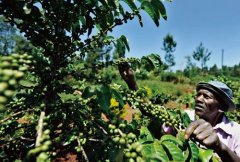
Can coffee trees planted in shade grow their own coffee beans?
Health and quality go hand in hand, says Byron Holcomb, a coffee farmer from Brazil. He deliberately grows coffee in the sun, and healthy coffee is more likely to get good quality. From a botanical point of view, coffee is a kind of lower shrub vegetation, which naturally needs to grow under taller trees, and such trees are the so-called shade plants for coffee.
2016-06-15 Shade grow coffee can oneself coffee beans health high quality accompany each other
Can coffee trees planted in shade grow their own coffee beans?
Health and quality go hand in hand, says Byron Holcomb, a coffee farmer from Brazil. He deliberately grows coffee in the sun, and healthy coffee is more likely to get good quality. From a botanical point of view, coffee is a kind of lower shrub vegetation, which naturally needs to grow under taller trees, and such trees are the so-called shade plants for coffee.
2016-06-15 Shade grow coffee can oneself coffee beans health high quality accompany each other